

What the air conditioning uses, and what acting would save.
The Ancillary Energy Report models a site’s air conditioning hour by hour across its own typical weather year, then works out what the recommendations made at the inspection could save, plant by plant, with five years of doing nothing set against acting. It is not a TM44 certificate and is not lodged. It is the paid piece of work that sits beside one.
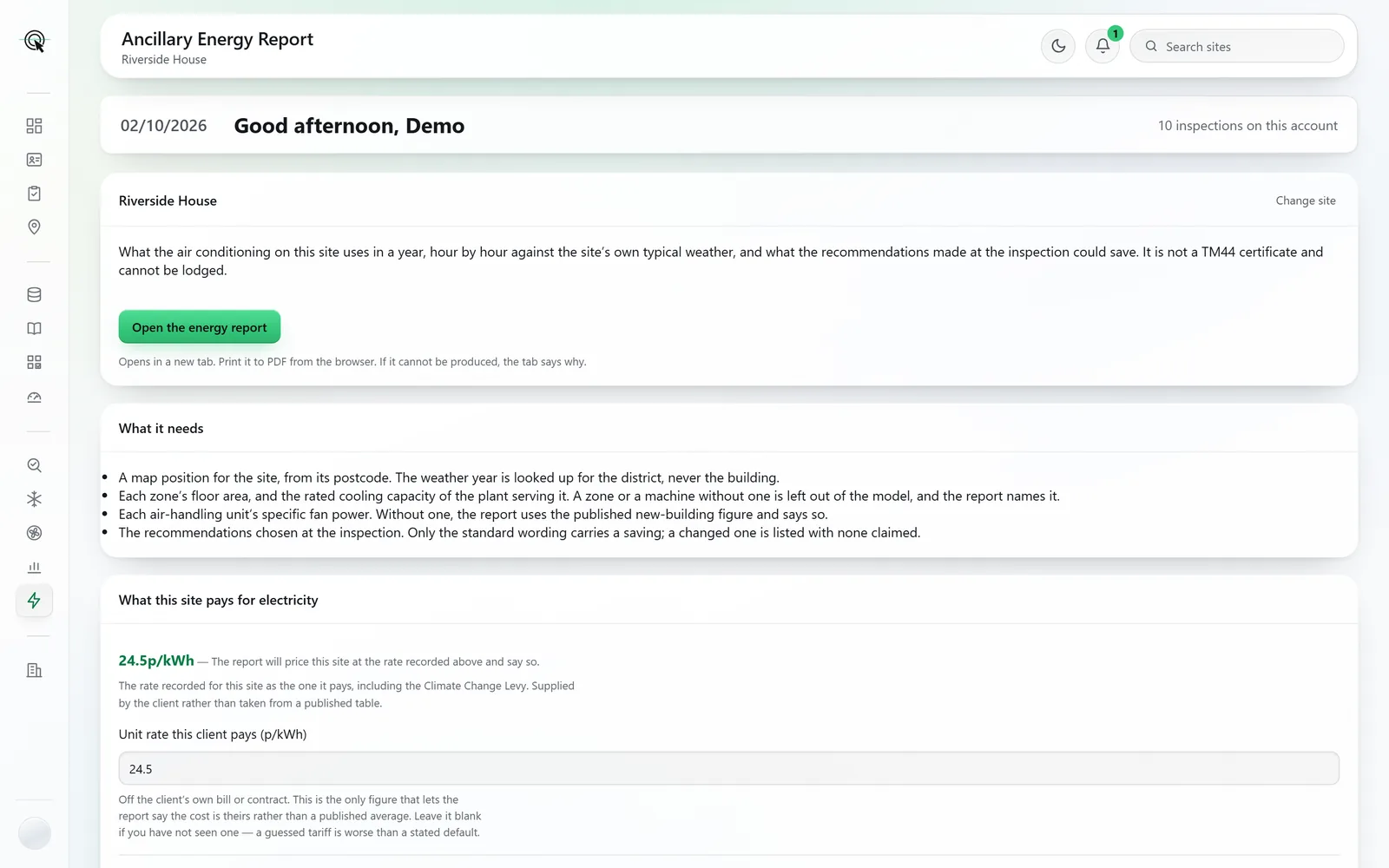
Screens and documents are from a sample account: the buildings, clients and assessor are made up.
- Hour by hour, on the site’s weather
- A typical weather year for the district, and every hour’s gains and losses in each zone.
- A saving for every recommendation
- Each one costed at the site’s tariff, with its range.
- From today to after
- The air conditioning’s electricity now, step by step to after the recommendations.
- Five years ahead
- Doing nothing set against acting, for each plant and the whole site.
The model
Built from the survey, the plant and the weather.
Hour by hour, on the site’s own weather
A typical weather year for the district from PVGIS, the European Commission’s Joint Research Centre service, and every hour’s heat gains and losses in each zone: fabric, sun through the glazing, people, lighting, equipment and fresh air.
The plant you surveyed
Each zone is met by the plant serving it, at its seasonal efficiency reduced for age. Load beyond the installed capacity is reported as unmet, never assumed away.
Air-handling fans
Fan energy from each unit’s specific fan power, and fan speed control worked out by the fan laws.
Cost and carbon
At the site’s own tariff where one is recorded, and in carbon at the grid factor in force, each cited on the page.
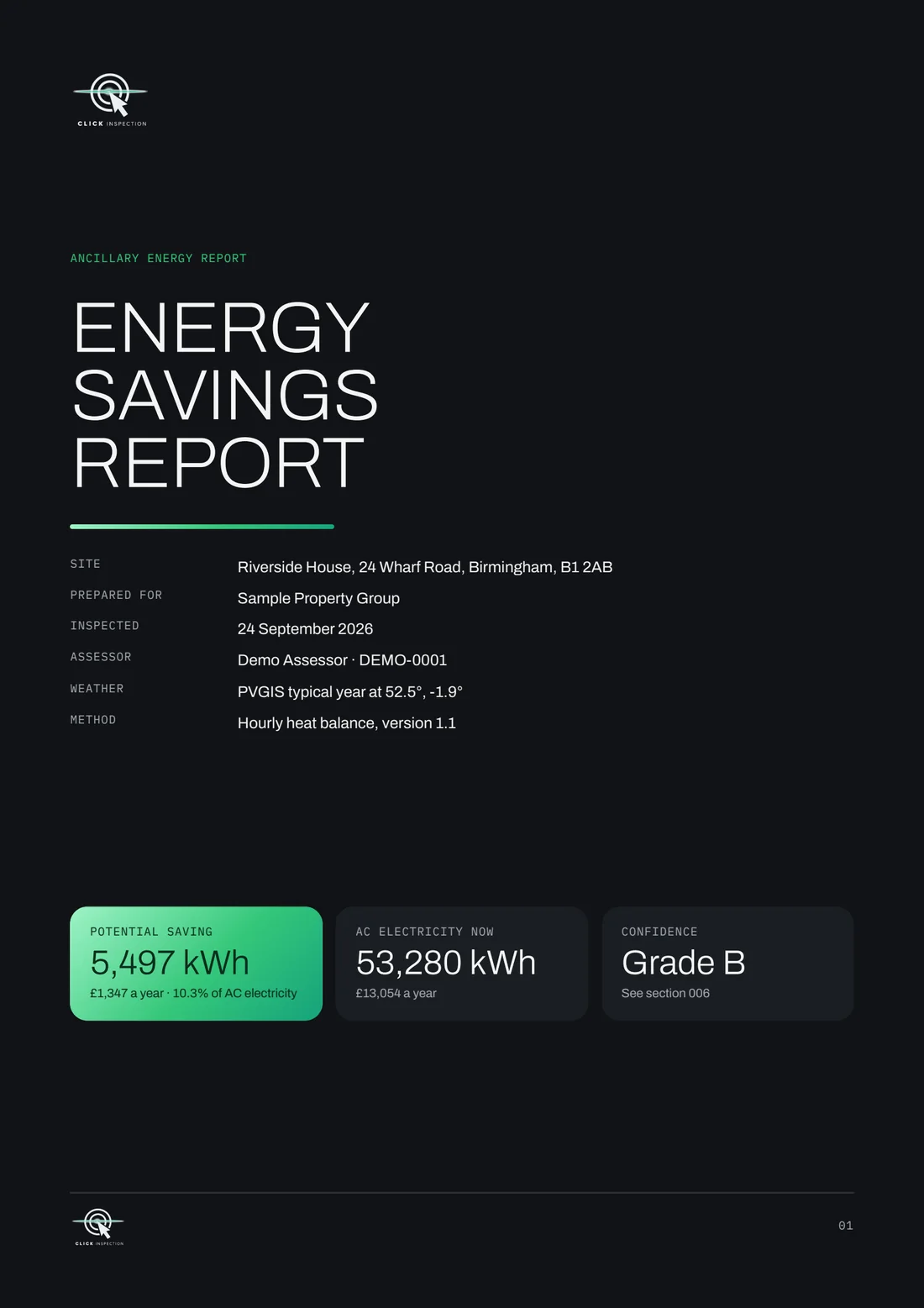
Every saving, step by step.
The report walks the air conditioning’s electricity from today to after the recommendations, one measure at a time, largest first, and shows what each recommendation is worth a year at the site’s own tariff, with its range.
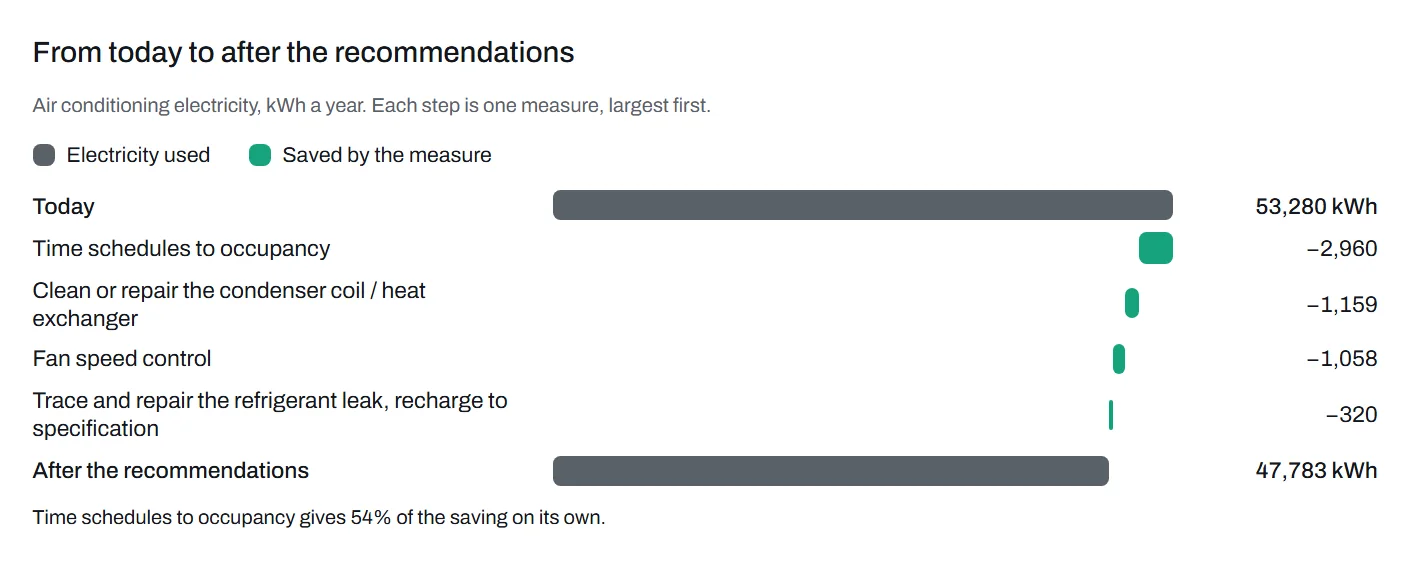
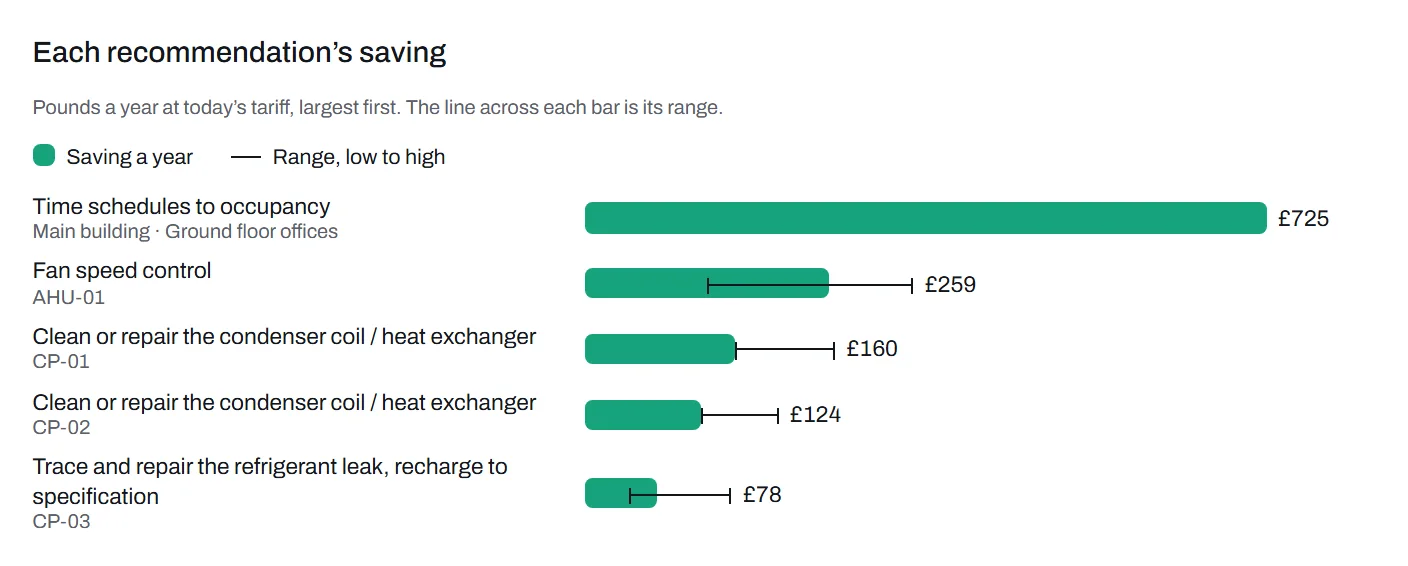
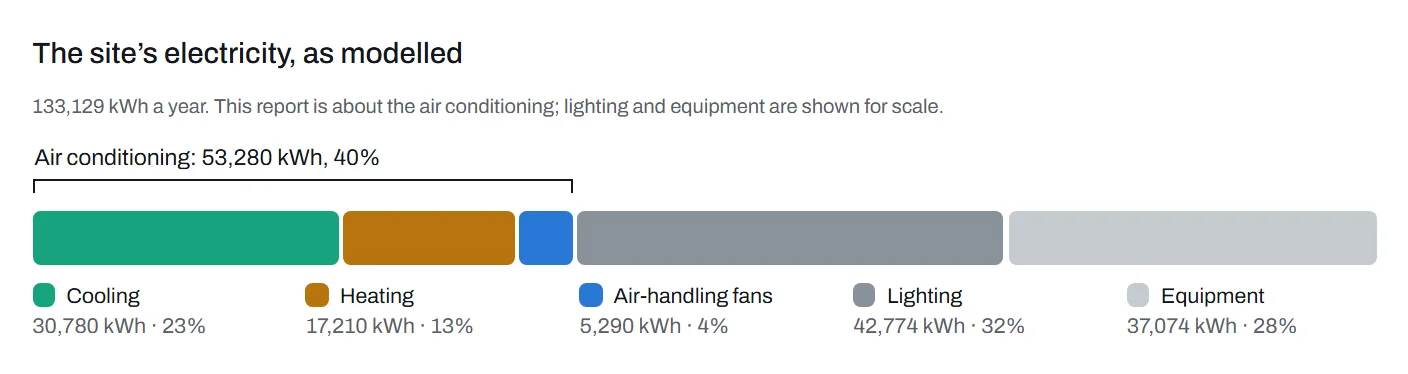
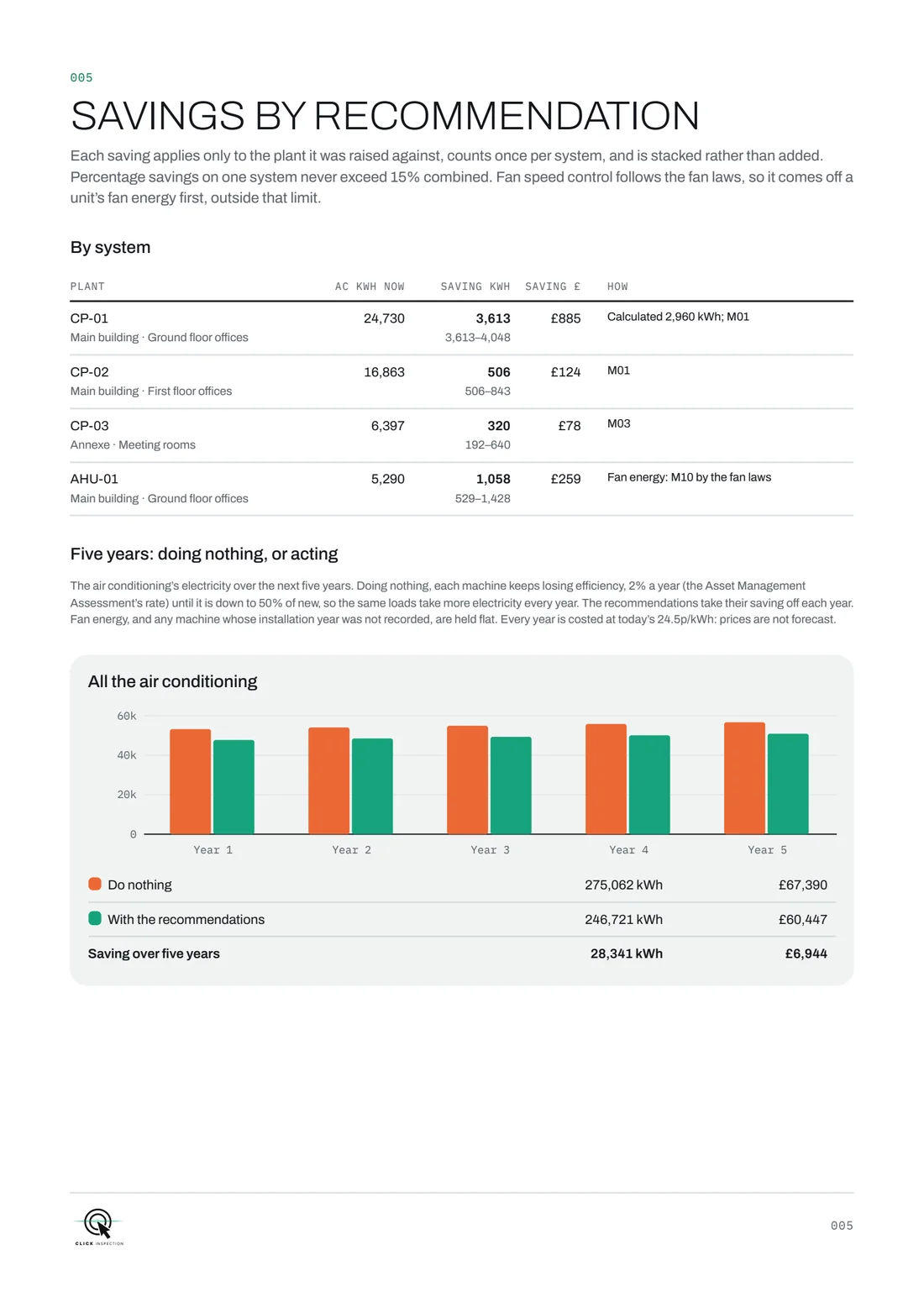
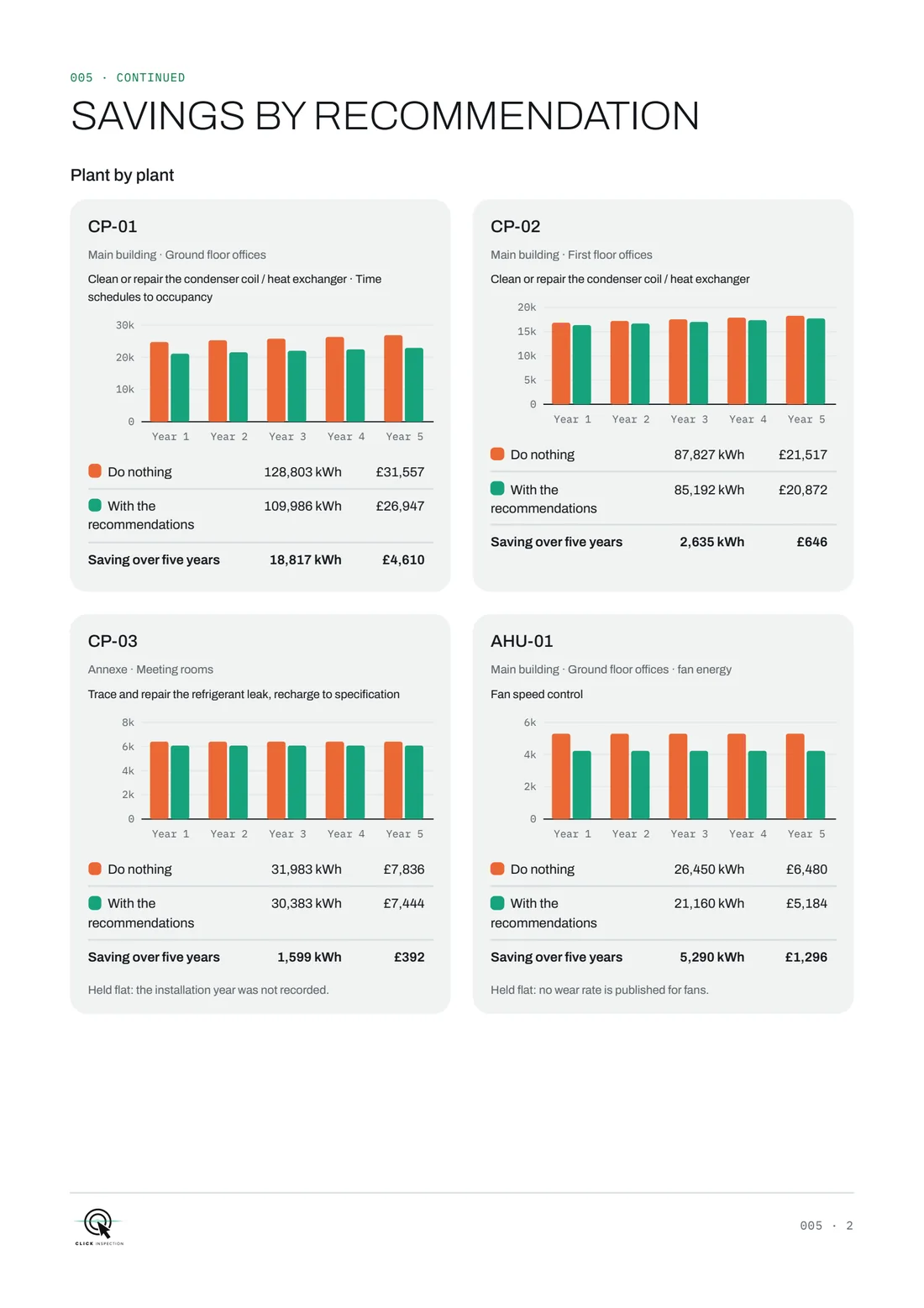
Percentage savings on one system are stacked, never added, and capped at 15% combined, and only the standard wording of a recommendation carries one. Five years of doing nothing are set against acting, for the whole site and plant by plant.
What it is built on
- It is a model, not a meter reading. Every input it uses is named in the report with where it came from, and the report carries a confidence grade.
- Doing nothing, efficiency falls 2% a year to a floor of half, the Asset Management Assessment’s rate. Fans, and machines whose installation year was not recorded, are held flat, and the page says which.
- Every year is costed at today’s tariff. Prices are not forecast.
- The savings are conservative estimates of what the recommendations could save, not a guarantee.
- It needs the site’s map position from its postcode, its building type, and each zone’s floor area and the capacity of the plant serving it. Without them it says what is missing rather than guessing.
Corporate plan only. The Ancillary Energy Report is one of the Corporate tools, included on the Corporate plan. It is not available on Pay As You Go or Private.
