

- Home
- TM44 inspection guide
Air conditioning inspection guide
What is a TM44 inspection?
The statutory, five-yearly inspection of any air conditioning system over 12 kW, named after CIBSE TM44, the method it follows.
Does the system need a TM44 inspection?
Four questions settle it in England and Wales, and they are the ones to settle with a client before you quote. Scotland and Northern Ireland are further down, and the sources are at the end.
-
Is it more than 12 kW?
Every air conditioning unit in the building controlled by the same person counts as one system, so their outputs are added together. A unit’s figure is its effective rated output: the maximum the manufacturer states it delivers in continuous operation. Four 3.5 kW split units run by one person make 14 kW, which is one system over the threshold.
- 12 kW or less in total No inspection is required.
- More than 12 kW Go on to 2.
-
Who controls it?
The duty sits with whoever controls the technical functioning of the system, not someone who only adjusts the temperature. That is usually the owner, even when day-to-day running is contracted out. Under a full repairing and insuring lease it is the occupier. A facilities management contract can make the FM company responsible too, but the landlord or occupier keeps a parallel duty.
- Control changed hands without the last report It must be inspected within three months of the handover.
- Otherwise Go on to 3.
-
When was it last inspected?
Inspections must be no more than five years apart. A system first put into service on or after 1 January 2008 needed its first inspection within five years of that date. Older systems were due by 4 January 2011, or by 4 January 2009 if over 250 kW.
- A report from the last five years Not due until five years after that inspection.
- No report, or an older one It is due now. Go on to 4.
-
Who can inspect it?
An energy assessor who is a current member of a government-approved accreditation scheme, qualified to the system’s level (Level 3 or Level 4). The report is valid only once the assessor has lodged it on the Energy Performance of Buildings Register; the person who controls the system gets a copy after that, and the next inspection falls due within five years.
What the assessor checks
Before the visit, the records. On site, the plant briefly and the controls closely.
The assessor asks for the system’s records ahead of the visit: catalogue information and the details from installation, commissioning and maintenance, and any earlier report.
On site, the refrigeration plant and its heat exchangers are checked briefly for damage or a lack of maintenance. Air moving systems are checked for the condition of filters and heat exchangers, and for damage or blockage. The controls get the closest look: set temperatures, time periods, control zones, sensor locations, and whether cooling can run at the same time as heating.
CIBSE TM44 sets out the method, with a simple procedure for packaged systems and a full procedure for centralised ones.

Level 3 and Level 4
Assessors qualify at one of two levels, and the system decides which is needed.

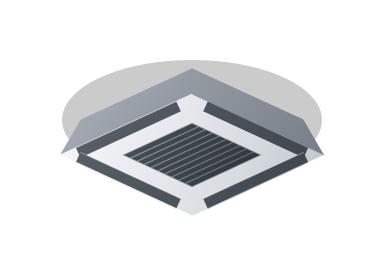
Level 3: simple and packaged systems
Split, multi-split and VRF systems, the plant outside and the units it serves inside, where no chilled water is used and the space has no mechanical air supply. TM44 calls this the simple procedure.
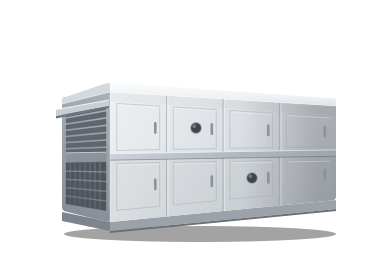
Level 4: complex and central systems as well
Everything at Level 3, plus chilled water systems, air handling units and their ductwork, packaged rooftop units and water-loop heat pumps. A system serving a space that also has a mechanical air supply needs Level 4 too. TM44 calls this the full procedure.
What the report must contain
The Air Conditioning Inspection Report (ACIR) covers:
- the likely efficiency of the system, with suggestions for improvement
- any faults found, with suggested actions
- whether maintenance is adequate, with suggestions
- whether the controls and their settings are adequate, with suggestions
- the size of the installed system against the cooling load, with suggestions
- how well the system can optimise its performance under typical operating conditions
- a summary of the findings and the key recommendations
It also gives the building’s address, the assessor’s name, their employer or trading name and address, the date of the inspection and the accreditation scheme. Since 6 April 2012 every report must be lodged on the Energy Performance of Buildings Register, which gives it its reference number. There is no legal requirement to act on the recommendations.
The person who controls the system must keep the report safe, for example in the building log book, so the next inspection can use it, and must pass it on to anyone who takes over control.
For assessors
The same inspection, in Click Inspection
Software for the assessor doing the walk-round. It follows the inspection from the plant to the export, and the ACIR XML is ready before you leave site.
- Photograph a data plate and the make, model, serial number, year, refrigerant and charge are filled in.
- Condition and housekeeping questions are read from the same photographs. Every answer stays yours to change.
- Each terminal unit records the cooling plant that serves it, and a controller’s mode and setpoint are read off its display.
- Generate the report and the summary and recommendations are drafted from what you recorded, for you to reword and accept.
- The app checks the inspection for anything missing before it exports the ACIR XML for lodgement.
Penalties and enforcement
Trading Standards, as the local weights and measures authority, enforce the rules in England and Wales. The penalty for not having an inspection report is £300. Failing to give a Trading Standards officer a copy within seven days of being asked is a further £200. An officer can ask for the report up to six months after the deadline for having one.
A penalty charge notice can be reviewed and then appealed to the county court within 28 days. An occupier is not liable where a central system is controlled by the building’s owner or manager.
Scotland and Northern Ireland
Both have their own regulations, with the same 12 kW threshold and no more than five years between inspections, but the details differ. In Scotland, separate systems are added together only if they are linked by a central control, inspections are by members of organisations approved by the Scottish Government, and the interval can be set at three to five years depending on how well the system is kept. In Northern Ireland, district councils enforce the requirement. Check the guidance for each before quoting.
Need an inspection for your building?
Click Inspection makes software for assessors and does not carry out inspections. Email info@clickinspection.com with the building’s address and we will point you to an accredited energy assessor.
Sources
- GOV.UK: A guide to air conditioning inspections in buildings (updated 18 September 2024)
- The Energy Performance of Buildings (England and Wales) Regulations 2012, Part 4
- CIBSE TM44: Inspection of air conditioning systems (2012)
- Scottish building standards, technical handbook 2022 (non-domestic), 0.17 continuing requirements
Checked 7 October 2026. A summary of the rules, not legal advice.
